How to Choose the Right Online Course & Certification for Your Career
Courses, Professional Certificates and industry certifications don't solve the same problem. Here's how to match the credential to where you actually are in your career.
You're not really buying a certificate. You're investing in the next version of your career — and that's where a lot of learning decisions quietly go wrong. One person wants to break into AI, another wants a promotion, a third just wants to stay current. Different goals entirely, yet they often end up comparing the exact same courses.
The internet doesn't help. Every platform promises "career-ready skills," every provider issues somekind of certificate, and before long you're weighing online courses against Professional Certificates against industry certifications against bootcamps as if they solve the same problem. They don't. The costliest mistake isn't picking the wrong provider — it's investing in the wrong type of learning for where you are today.
The Short Version
If you only read one thing, read this table. It's where most learners should start; the rest of this guide explains why.
| Your goal | Better starting point |
|---|---|
| Learn one new skill | Online course |
| Change careers | Professional Certificate |
| Validate existing expertise | Industry certification |
| Earn academic recognition | University certificate or degree |
| Explore a new field | Free or introductory course |
| Upskill quickly | Short course or bootcamp |
Start With the Decision, Not the Platform
The question we see most often — on Reddit, in communities, in our own course reviews — is "which certification should I take?"It's usually the wrong first question. Start with "what problem am I actually trying to solve?" instead. Three questions get you there:
- Where do I want to be a year from now? Not next week, not after one course. Changing careers, earning a promotion, going freelance, and staying current are different destinations that call for different paths.
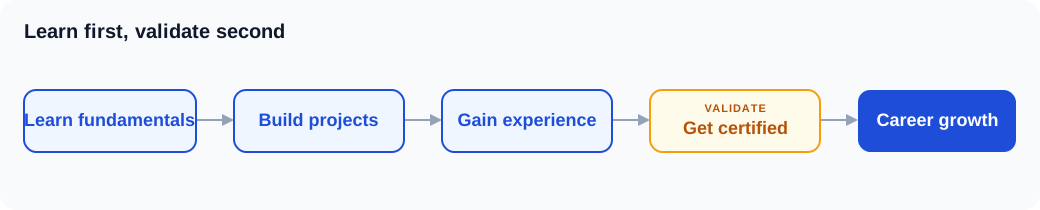
- Do I need skills or proof?They're related but not identical. Someone starting a cloud journey needs education first; someone sitting an AWS exam usually already has the skills and needs validation. Build capability, then demonstrate it — most people benefit from that order.
- How much time can I realistically commit?One course finished beats five abandoned halfway. An ambitious roadmap you never complete isn't an investment; it's unfinished homework.
Courses, Certificates, and Certifications Aren't the Same Thing
Every provider seems to invent its own vocabulary — Professional Certificate, Career Certificate, Specialization, Nanodegree, Microcredential. It's easy to assume they compete. In reality they often solve different problems. The useful way to think about it: a credential isn't the goal — it's evidence of a learning journey, and its value depends entirely on what you're trying to prove.
| Credential | What it's for | Best for | Typical time |
|---|---|---|---|
| Online course | Learn one skill | Beginners, upskilling | Hours – weeks |
| Professional Certificate | Prepare for a role | Career changers | 2–6 months |
| Industry certification | Validate expertise | Working professionals | Exam-based |
| Bootcamp | Intensive practical learning | Fast transitions | Weeks – months |
| University certificate | Formal / continuing education | Academic learners | Months |
| Degree | Comprehensive education | Long-term academic path | Years |
Two distinctions do most of the work here. Online courses teach a single skill — the certificate, if any, just confirms you finished. Professional Certificates are built around a job role rather than a skill: the Google Data Analytics Professional Certificate, for instance, doesn't just teach SQL — it teaches the work of a data analyst. And industry certifications mostly exist to validate, not to teach — exams like the AWS Solutions Architect Associate assume you've already learned and practiced the material, which is why experienced professionals tend to pursue them later, not first.
Recognition isn't universal, either. A credential that carries real weight in cloud or cybersecurity may mean little in UX design, where a strong portfolio often outweighs any certificate. Understanding your own field's expectations beats following generic advice.
How Employers Actually Read Credentials
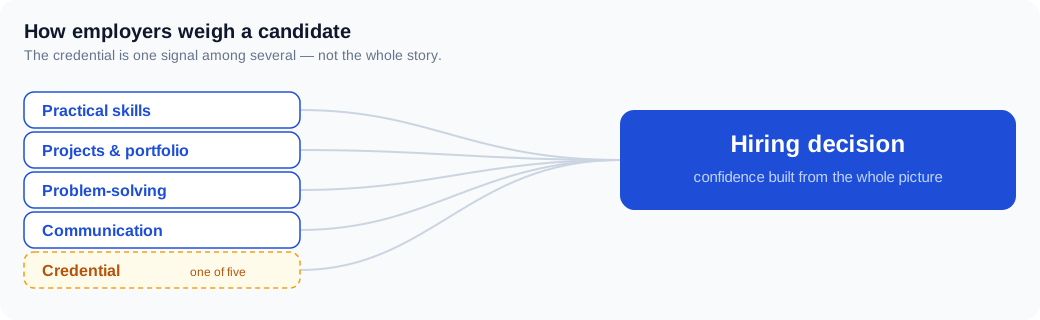
"Will employers recognize this?" is the question behind nearly every learning decision. The honest answer: yes — but rarely the way people expect. Hiring managers seldom decide on a certificate alone. They build confidence from several signals at once — practical skills, projects, problem-solving, communication, evidence of continuous learning — and the credential is one supporting piece, not the whole story.
That's why the strongest candidates finish a program and then keep building. A certificate doesn't replace a project; it strengthens the case a project already makes. Most interviews don't open with "show me your certificate" — they open with "tell me about something you built."
A Framework You Can Reuse Before Any Course
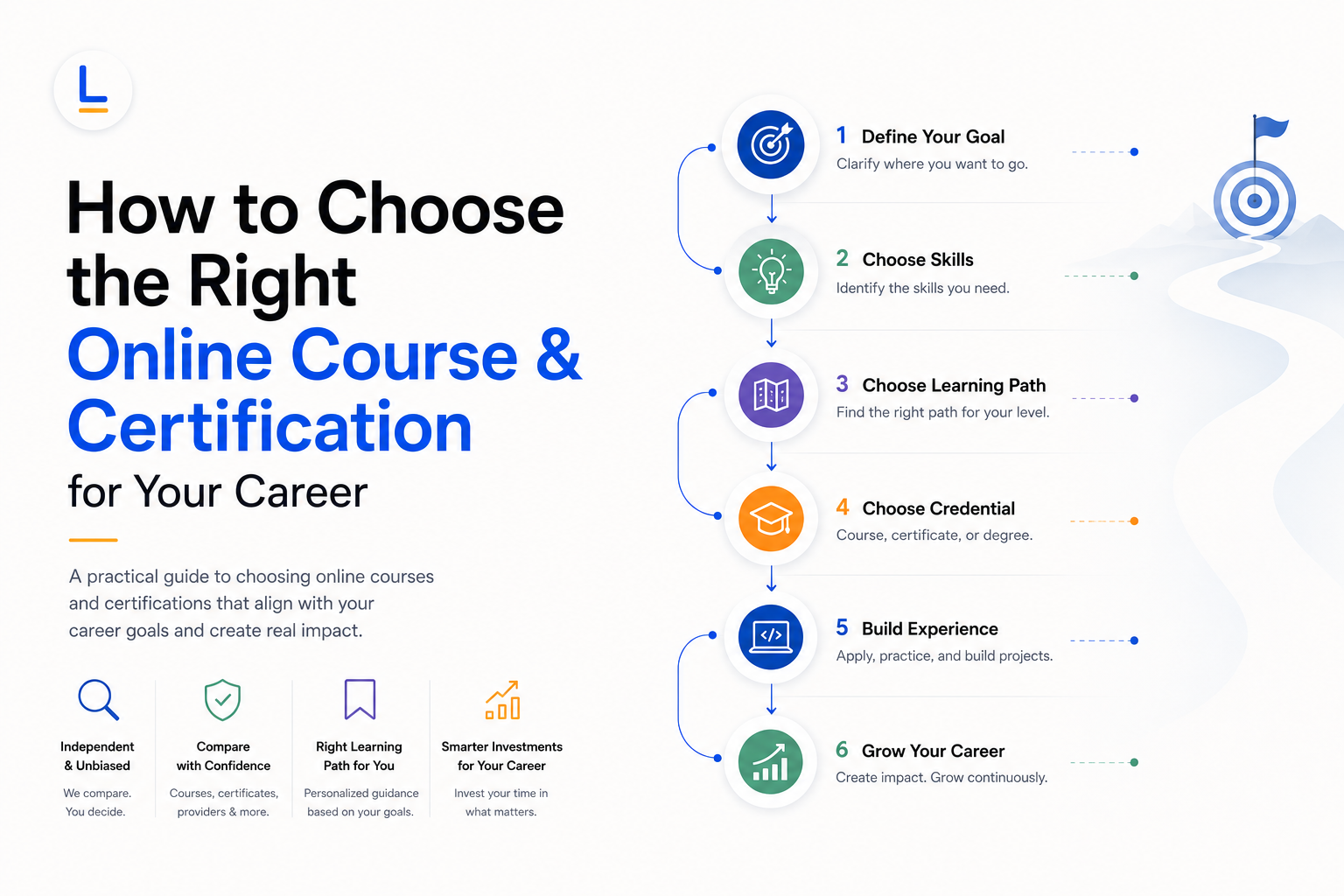
After reviewing hundreds of courses and learning paths, the strongest decisions tend to follow the same order — and notice what comes before the credential:
- Define the career goal. Ask "what role am I trying to earn?" — not "which certificate is popular?"
- Identify the skills that role expects. Every job is a bundle of skills; list what someone already doing it can do.
- Choose the learning path, not just the platform. Two courses can both promise "AI engineering" while teaching completely different things — one stops at prompting, another (like the AI Engineer Core Track) goes deep on RAG, fine-tuning, and agents.
- Build something real. One finished project teaches more than hours of passive watching — and it's what interviews actually probe.
- Validate with the right credential. Now the certificate confirms experience instead of standing in for it.
Before enrolling, compare at least three learning paths — not three providers. The sequence of skills matters more than the logo on the homepage.
Provider Reputation Isn't Everything
"Which provider is best?" is the wrong lead question. Reputation opens the door; the curriculum keeps it open. When we evaluate a course at Learn by Source, brand isn't at the top of the list — these factors are:
| Factor | Why it matters |
|---|---|
| Curriculum | Does it teach the skills the role actually needs? |
| Practical projects | Will you build something you can show? |
| Instructor expertise | Is the material current and trustworthy? |
| Career alignment | Does it move you toward your specific goal? |
| Credential value | Is the recognition right for your industry? |
| Community & support | Can you keep learning after the course ends? |
Which Path Fits Where You Are
There isn't one roadmap. The right one depends on your starting point:
- Exploring a new field. Optimize for clarity, not recognition. A low-risk, audit-free first step like AWS Cloud Practitioner Essentials lets you test whether the work suits you before committing to a bootcamp. Browse by interest: AI & ML, cloud computing, data science, or the free course library.
- Changing careers. This is where structured learning earns its keep. A Professional Certificate like the IBM Data Science Professional Certificate gives a career transition context, workflow, and vocabulary — then your own projects turn it into a portfolio.
- Already working in the field.You probably don't need another beginner course. Validation, specialization, or an industry certification usually creates more long-term value than repeating fundamentals.
- Your employer requires a specific certification. Straightforward — if the job listings keep asking for it, it belongs on your roadmap. Just not necessarily first; learn the material before paying to sit the exam.
Mistakes That Cost Time and Money
The same patterns show up again and again:
- Collecting certificates instead of building skills. Certificates don't create experience; projects do.
- Buying advanced courses too early. Skipping fundamentals usually slows you down, not speeds you up.
- Choosing a provider before choosing a career. Pick the destination first, then the vehicle.
- Confusing completion with competence. Learning isn't done until you've used the skill on something real.
- Never revisiting the plan. Industries move; review your roadmap every six to twelve months.
Before You Pay for Any Course
If you can answer "yes" to most of these, you're probably making a thoughtful investment. Several "no"s are a signal to keep researching — choosing carefully now is far cheaper than starting over later.
- ✅ I know the career I'm working toward
- ✅ I understand why this course fits that goal
- ✅ The curriculum teaches skills I'll actually use
- ✅ I'll have chances to build real projects
- ✅ I have the time to finish it
- ✅ The credential matches my current career stage
- ✅ I've compared similar learning paths, not just providers
- ✅ I know what I'll learn after completing it
The Real Question
The most valuable question isn't "which certificate should I earn?" It's "what kind of professional do I want to become?"Once that's clear, the rest falls into order: the right skills, the right learning path, the right provider, the right credential — usually in that sequence. No two careers start in the same place, which is why the best learning investment is rarely the one with the biggest logo. It's the one that moves you one meaningful step closer to the work you actually want.
When you're ready to compare specifics, our certification guide breaks down how each credential type fits into a career, and our in-depth course reviews explain who each course is really for — and what to learn before and after it.